How Solar Works in Alberta
Solar panels convert sunlight to DC power, an inverter makes it usable AC, your home consumes it first, and any surplus exports to the grid for bill credits at your retail rate (up to $0.35/kWh on 2026 solar rates). Systems work year-round in Alberta, and cold actually improves panel efficiency.
Solar energy is straightforward once you understand the basics. Panels on your roof absorb sunlight, an inverter converts that energy into usable electricity, and your home draws from it in real time. Any surplus gets exported to the grid, earning you credits on your utility bill. Here is how each part of that process works in Alberta.
How Do Solar Panels Produce Electricity?
Solar panels are made up of photovoltaic (PV) cells, typically manufactured from crystalline silicon. When photons from sunlight strike these cells, they knock electrons free from silicon atoms, creating a flow of direct current (DC) electricity. This is called the photovoltaic effect, and it happens silently with no moving parts.
Modern residential panels typically produce between 400 and 450 watts each under standard test conditions. In real-world Alberta conditions, actual output varies based on temperature, shading, panel orientation, and time of year. Calgary and southern Alberta benefit from some of the highest solar irradiance levels in Canada, averaging around 1,300 to 1,400 kWh per installed kilowatt per year.
DC to AC Conversion: The Role of the Inverter
Your home appliances, lights, and electronics all run on alternating current (AC). Solar panels produce direct current (DC). The inverter bridges this gap by converting DC power into grid-compatible AC power at 240 volts and 60 Hz.
There are two main inverter types used in residential solar:
- String inverters connect panels in series. All panels feed into a single inverter, typically mounted on the wall near your electrical panel. These are cost-effective, reliable, and the most common choice for straightforward roof layouts.
- Microinverters are installed behind each individual panel. Each panel operates independently, which can improve performance when panels face different directions or experience partial shading. They cost more upfront but offer panel-level monitoring and optimization.
Understanding ILR and Clipping
The inverter loading ratio (ILR) describes the relationship between total panel capacity (in DC watts) and inverter capacity (in AC watts). A common ratio is 1.2:1 or higher, meaning a 10 kW panel array might be paired with an 8 kW inverter.
This intentional oversizing means that during peak midday sun in summer, the panels may produce more DC power than the inverter can convert. The excess is "clipped" and lost. However, this design actually maximizes total annual energy production because the panels spend more hours of the day filling the inverter to capacity, especially during morning, evening, and cloudy conditions. The small amount of energy clipped at peak is more than offset by higher production during the other 90% of daylight hours. For a deeper dive, see our primer on inverter sizing and clipping.
How Does Your Home Use Solar Energy?
Once the inverter converts DC to AC, that electricity flows through your electrical panel and powers your home in real time. Your appliances do not know or care whether the electricity comes from solar panels or the grid. Solar energy is consumed by your home first, reducing the amount you need to buy from your retailer.
When your panels produce more electricity than your home is using, the excess automatically flows out to the grid through your utility meter. When your panels produce less than you need (at night, for example), you draw from the grid as usual.
Alberta's Microgeneration Program and Net Billing
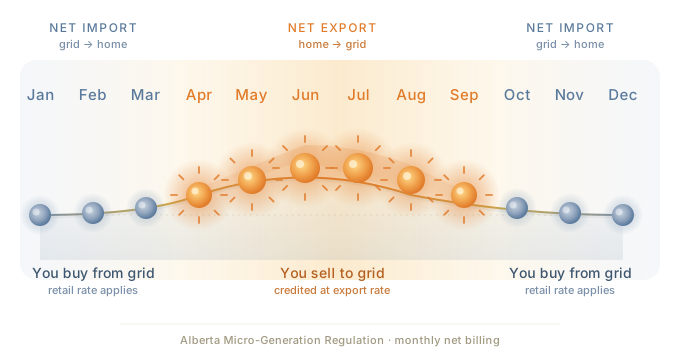
Alberta's Micro-Generation Regulation allows homeowners to connect solar systems up to 5 MW to the grid. For residential systems, the most relevant program is net billing under the Small Micro-Generation category (systems up to 150 kW).
Under net billing, your utility meter tracks both the electricity you consume from the grid and the electricity you export. You are billed for your net consumption. When you export surplus energy, you receive a credit at your retail electricity rate: the same price you pay per kWh is the price you are credited per kWh. Retailers with dedicated solar rates credit exports at up to $0.35/kWh as of 2026. The credit appears on your monthly utility bill and offsets your entire bill, including delivery and transmission charges.
Net billing differs from classic net metering in mechanics, not economics: instead of one meter reading netting kWh in and out, your imports and exports are each priced on your bill. Because both directions are priced at the retail rate, you are never selling low and buying high. Pairing a high solar rate in the sunny months with a low-rate plan in winter is where Alberta solar owners do best, and it is part of every Flux design conversation. For the full mechanics with a worked bill example, see how net billing works in Alberta.
What Happens to Excess Energy?
During sunny summer days, a well-sized solar system will often produce more electricity than the home consumes. That surplus flows to the grid and earns export credits. During winter months and at night, you draw from the grid and use those credits to offset your bill.
Over the course of a year, many Alberta homeowners with properly sized systems can offset 80 to 100 percent of their annual electricity consumption. The exact percentage depends on your system size, your household's consumption patterns, and how much of your usage occurs during daylight hours.
Does Solar Work in Winter?
Yes. While production is lower in winter due to shorter days and lower sun angles, Alberta's cold, dry climate actually helps panel efficiency. Solar panels perform better in cold temperatures, and snow typically slides off panels within a day or two on south-facing roofs. Calgary averages 333 days of sunshine per year, and winter months still contribute meaningful production. A well-designed system accounts for seasonal variation and is sized to maximize annual performance, not just summer output.
Key Takeaways
- Solar panels convert sunlight to DC electricity with no moving parts
- Inverters convert DC to AC for your home appliances
- Surplus energy is exported to the grid for credits at your retail rate, up to $0.35/kWh on dedicated solar rates as of 2026
- Alberta's solar irradiance is among the best in Canada
- Systems work year-round, including winter, with cold temperatures actually improving panel efficiency
- A properly designed system accounts for ILR, clipping, and seasonal variation