Solar Costs, Savings & Incentives in Alberta
A quality Alberta residential install costs $2.00 to $2.25 per watt in 2026, so the average 8 kW system runs $16,000 to $18,000 before incentives. Savings come from consuming your own production plus export credits at your retail rate; typical residential payback is about 6 to 9 years.
Understanding how much solar costs, what drives those costs, and how savings accumulate over time is essential for making an informed decision. This guide breaks down pricing, savings, and available incentives for Alberta homeowners in 2026.
How Much Does Solar Cost in Alberta in 2026?
A quality residential solar installation in Alberta typically costs between $2.00 and $2.25 per watt for residential ($1.50-$2.50 for commercial) (before any incentives). The average home system is around 8 kW, which translates to $16,000 to $18,000 installed. This price includes panels, inverter, racking, electrical work, permitting, and labour.
The price per watt formula is simple: divide the total system cost by the total DC wattage. An $18,000 system with 8,000 watts of panels equals $2.25 per watt. This metric allows you to compare quotes from different installers on an apples-to-apples basis regardless of system size.
Factors That Affect Cost
Not every installation costs the same per watt. Several factors push the price up or down:
- System size: Larger systems typically have a lower cost per watt because fixed costs (permitting, design, mobilization) are spread across more panels.
- Inverter type: Microinverters cost more than string inverters, adding $0.15 to $0.40 per watt to total system cost. However, they offer panel-level optimization and individual monitoring.
- Roof complexity: Steep pitches, multiple roof planes, tile or shake roofing, and limited access can increase labour costs. A simple south-facing gable roof is the easiest and most affordable to install on.
- Electrical work: Older homes may need a panel upgrade, a new meter base, or additional conduit runs. These can add $1,000 to $4,000 to the project depending on what is needed.
- Equipment quality: Tier 1 panels with 25-year product warranties and reputable inverter brands cost more than budget components but provide better long-term reliability and warranty support.
How Do Solar Savings Work?
Solar saves you money in two ways: reducing the electricity you buy from the grid (self-consumption) and earning credits for electricity you export (net billing credits).
The value of your savings depends on several factors:
- Your electricity usage: Homes with higher consumption have more potential for self-consumption savings. A household using 800 kWh per month will save more than one using 400 kWh.
- Export rates: Under Alberta net billing, exported surplus is credited at your retail electricity rate, the same price you pay per kWh. Retailers with dedicated solar rates credit up to $0.35/kWh as of 2026. Retail rates change over time, which moves the credit with them.
- Usage patterns: If you consume most of your electricity during the day when panels are producing, your self-consumption ratio is higher and your savings are greater. Running appliances like dishwashers, laundry, and EV charging during sunny hours maximizes this benefit.
- Electricity price trends: As electricity rates increase over time, the value of your solar production increases too, since each kilowatt-hour you generate avoids a higher purchase price.
Payback Period Calculation
The payback period is the number of years it takes for cumulative savings to equal your initial investment. For most Alberta homeowners, the payback period falls between 7 and 10 years for residential systems, and as low as 5 years for commercial projects with the 30% ITC and accelerated CCA, depending on system cost, energy usage, and the split between self-consumption and export.
A simple calculation: If you install a $17,000 system that saves you $2,900 per year in electricity costs and export credits, your simple payback is approximately 6 years. After that, the system continues producing free electricity for another 15 to 20 years, as panels are warranted for 25 or more years.
What Incentives Are Available in Alberta?
Net Billing Credits
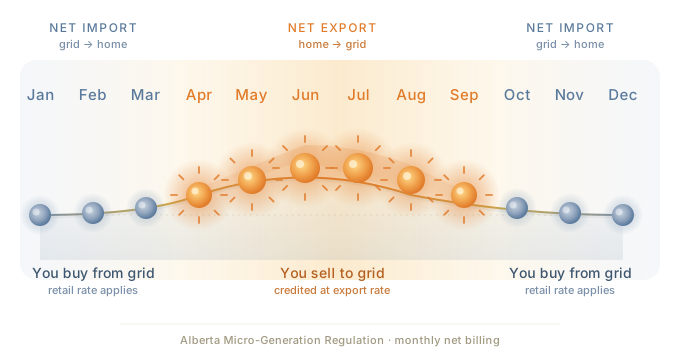
Alberta net billing credits you for every kilowatt-hour of surplus energy exported to the grid, at the same retail rate you pay for imports (up to $0.35/kWh on dedicated retailer solar rates as of 2026). Credits accumulate monthly and offset your entire bill, including delivery and transmission charges. This is the primary incentive for residential solar in Alberta.
Federal Investment Tax Credit (ITC)
The federal Clean Technology Investment Tax Credit provides a 30% refundable tax credit on the cost of eligible clean energy equipment, including solar panels and battery storage. This incentive is available to businesses, including incorporated farms and commercial operations. Residential homeowners without business income are not eligible for the ITC, but those with eligible business use of their property may qualify.
Canada Greener Homes Grant
The Canada Greener Homes Grant, which offered up to $5,000 for residential solar, closed to new applicants in 2024 and is no longer available. The companion Canada Greener Homes Loan (interest-free financing with an EnerGuide evaluation) has continued to operate; check current federal program status before counting on it in your budget.
Municipal Programs
Some Alberta municipalities offer PACE (Property Assessed Clean Energy) financing or other local incentive programs. Check with your municipality for any available programs that could reduce your upfront costs or offer favourable financing terms.
Long-Term Financial Picture
After the payback period, your solar system generates essentially free electricity for the remaining 15 to 20 years of its warranted life. Over a 25-year period, a typical Alberta system generates $50,000 to $80,000 in cumulative electricity savings, depending on system size and future electricity rates. Solar also adds value to your home, with studies showing that solar-equipped homes sell for a premium compared to similar homes without solar.
Frequently Asked Questions
How much do solar panels cost in Calgary?+
A quality residential installation in Alberta typically costs $2.00 to $2.25 per watt installed ($1.50 to $2.50 for commercial), before incentives. The average home system is around 8 kW, so $16,000 to $18,000 including panels, inverter, racking, electrical work, permitting, and labour.
What is the payback period for solar in Alberta?+
Most residential systems pay back in about 6 to 9 years depending on system cost, energy usage, and the split between self-consumption and export. Commercial projects with the 30% federal ITC and accelerated CCA can pay back in as little as 5 years. After payback, the system keeps producing essentially free electricity for 15 or more years.
What solar incentives are available in Alberta in 2026?+
The primary residential incentive is Alberta net billing, which credits exported surplus energy at approximately $0.35/kWh. Businesses, including incorporated farms, can claim the 30% federal Clean Technology Investment Tax Credit. Some municipalities also offer PACE or CEIP financing through property taxes.
Can homeowners claim the 30% federal solar tax credit?+
The federal Clean Technology ITC applies to businesses. Residential homeowners without business income are not eligible, though homeowners with eligible business use of their property may qualify. For most homeowners the $0.35/kWh export credit is the incentive that drives the return.
How do I compare solar quotes from different installers?+
Divide the total system cost by the total DC wattage to get cost per watt. An $18,000 quote for an 8,000 watt system is $2.25 per watt. This lets you compare quotes on an apples-to-apples basis regardless of system size, then weigh equipment quality, warranties, and who actually performs the installation.
Key Takeaways
- Expect to pay $2.00 to $2.25 per watt for residential ($1.50-$2.50 for commercial) for a quality installation in Alberta
- Use cost per watt to compare quotes fairly between installers
- Residential payback typically ranges from 6 to 9 years. Commercial systems with the 30% ITC and CCA can see payback in as little as 5 years
- After payback, you benefit from 15+ years of free electricity production
- Net billing credits at approximately $0.35/kWh are the primary residential incentive
- The federal ITC provides a 30% credit for eligible business installations